Catalogs, magazines, direct mail, conference giveaways. Brands have been putting content into our hands for a long time. Are there newer, fresher ways to think about how we use physical content?
When I set out to write this article, I wanted to write about unexpected ways brands are bringing content into the physical world. There are some great examples of this, like Microsoft’s limited-edition print magazine Signal.
But the examples that grabbed my attention weren’t well-defined by being tangible alone. Instead, I was drawn to the content that felt made.
In some cases, that meant content that used hand-drawn images. In others, it was content meant to be handled, transformed, or created by the audience. There was an element of craft.
A Brief Perspective on the Hand-Made
I have an affinity for handmade objects. When I’m not clacking away at my keyboard for work (which, by the way, is mechanical), I knit, sketch, journal, garden, cook, mend, and bake.
My interest in the handmade, however, is not simply a personal preference. In recent years, we have had to navigate the ubiquity of generative AI and a world in which many of our experiences, such as school and work, have shifted into digital realms.
These changes are prompting reactions. As a parent, I’m frequently served ads for nostalgic new products that promise a “low-tech” experience for my children. Adobe identified handmade, imperfect aesthetics as a design trend for 2026. “AI slop” has entered our vocabulary.
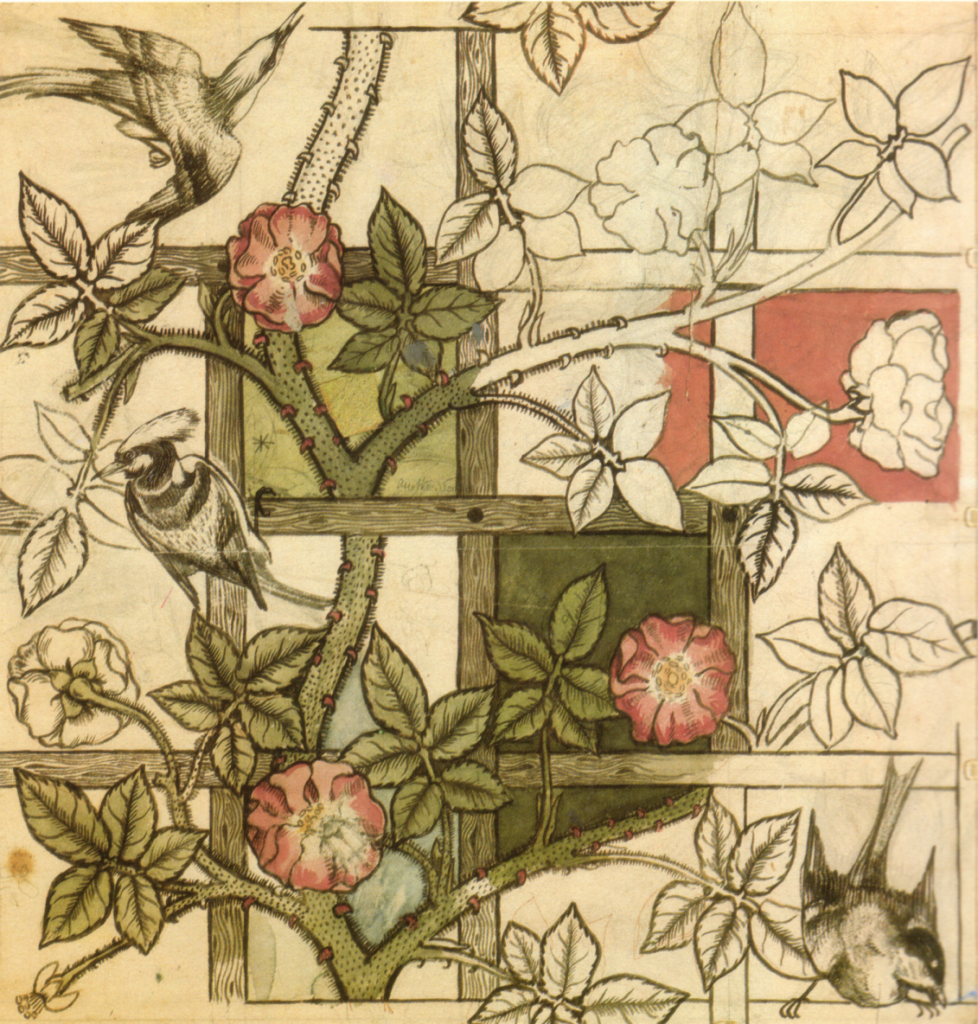
Others have compared this age to the Industrial Revolution. I think it is worth noting, however, that this past era of technological innovation and upheaval contributed to the emergence of the Arts and Crafts movement in England, which emphasized the value of handcrafted objects.
For the marketer, AI and digital spaces aren’t going away. But as we live and work through this period of change, I think we have an opportunity to make the human hand evident in the content we create and the experiences we craft.
5 Examples of Creative Content Marketing That Celebrate the Act of Making
Here are five examples of content that are inspiring me to think more about the role of human experiences — and the human hand — in content marketing.
1. Ann Handley’s Sharpie
Ann Handley embodies what I want to see in written content: a vibrant humanity paired with a love for words and the craft of writing.
In the last few years, she has started using hand-drawn charts and graphics in her social media content. In this example, she’s drawn a bar chart that summarizes results from a social media marketing survey. She doesn’t share a screenshot or a photo — she holds up a sketchbook, the data traced with a bold black marker.
This approach feels incredibly fresh. Why? AI can generate just about any image you can imagine. It can clean up wonky data presentations. And, like pen and paper, is largely accessible.
What I appreciate about Ann’s sketches is that, though they are imperfect and imprecise — in that post, she even acknowledges that she made a mistake — they are quick to make and communicate what they need to. They’re simple and effective. She has examined the data, thought about it, and traced it out.
Though she could have probably just as quickly and easily made these charts using AI or just used a screenshot, the hand-drawn graphics are evidence that she’s sat with the data and thought about it.
Takeaway: Is there content where you can set aside some marketing polish and embrace content with some rough edges?
2. Sketch Your Science
Every chemist has to learn how to draw chemical structures. There’s a certain pride that comes from being able to draw challenging structures well and dismay at encountering impossible ones in the wild.
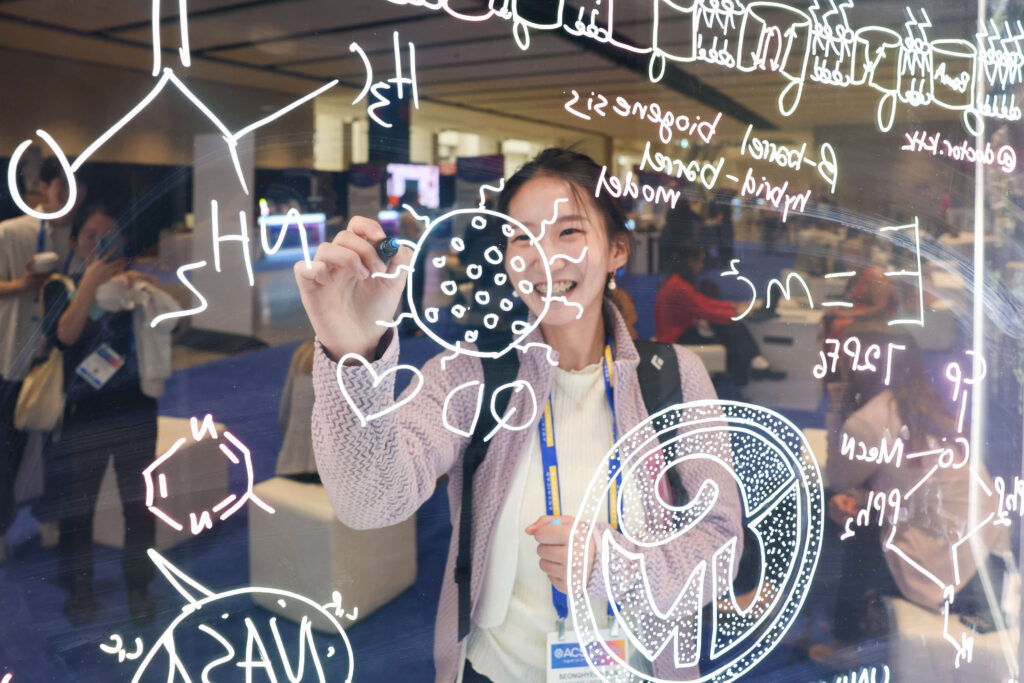
ACS BrandLab wanted to tap into those experiences. For ACS Fall 2026, the American Chemical Society’s annual meeting, we created an activation called “Sketch Your Science”. We simply set up a wall of blank whiteboards in a high-traffic area, provided dry-erase markers, and waited. Within hours after the meeting’s opening, attendees filled the panels with chemical structures, technical diagrams, and scientific illustrations.
Students and mentors gathered around the panels to discuss what they were learning at the meeting. Individual attendees browsed the sketches. I pointed out interesting structures to my colleagues and found a few that were related to my own graduate research.
What made this activation special was that it mirrored an experience scientists are familiar with — using hand-drawn images to share and explain science. While BrandLab provided the medium, it was the attendees who really created the experience.
Takeaway: How can you create experiences where your customers can create something?
3. Slack Huddles Music, Vol. 1
Earlier this year, around 200 people received a special gift from Slack: a vinyl record. It only had one, very specific genre: the waiting room music every Slack user hears when joining a huddle.
Here’s one person’s reaction to receiving record 146/200.
I love this gesture. Slack took something as ephemeral as the electronic music used in a virtual waiting room for a digital product and turned it into an absurdly physical object — the music is literally pressed into the record’s grooves.
For those who received the record, Slack no longer only exists on their computer or laptop: they can hold a piece of it in their hands.
As far as marketing goes, this vinyl record leans more toward the swag or stunt category. But as content, it makes the experience of using Slack a little more real and embodied.
Takeaway: When selecting giveaways and swag, are there out-of-the-box objects that embody a core element of your brand or organization’s experience? Can you make something abstract more tangible?
4. Loewe’s Crafty Cover
Loewe is a luxury fashion house known for its celebration of artisanal crafts. Every quarter, the brand publishes a magazine that is physically available in its stores.
A branded print publication is not a new idea, but it can provide audiences with a tangible piece of brand content that is worth keeping. The Loewe magazine can be a souvenir of an in-store shopping experience. Similarly, Microsoft’s 150-page Signal magazine gives its limited audience a physical keepsake.
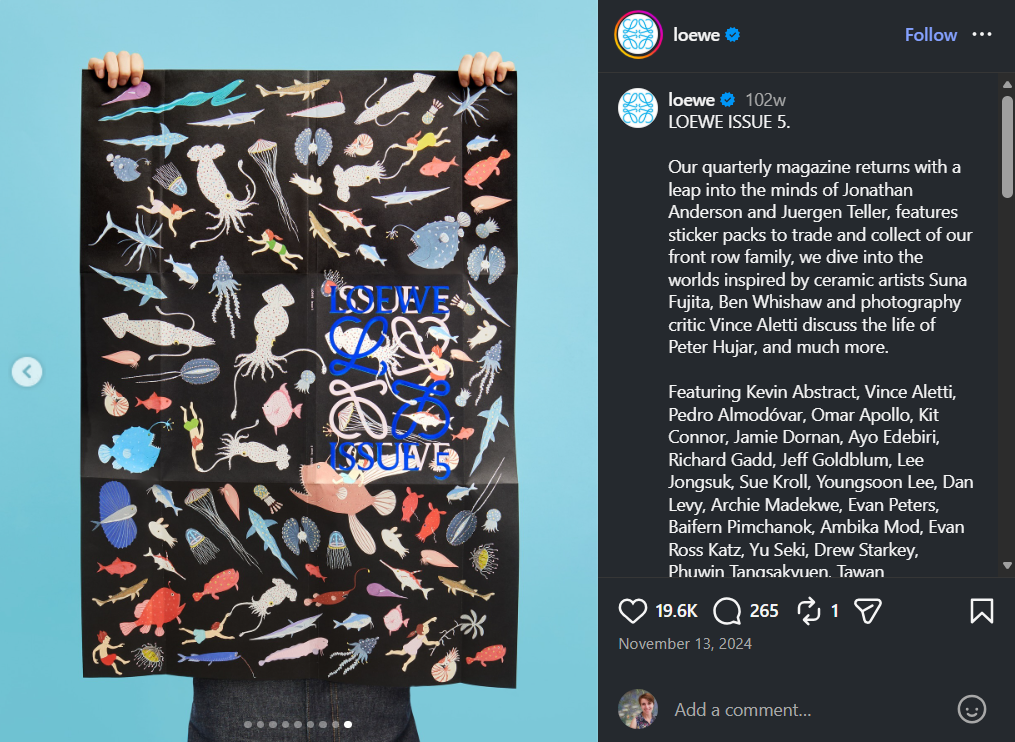
The November 2024 issue of Loewe’s magazine, Issue 5, gives readers more than a magazine to keep: the removable cover unfolds into a large poster. The poster features dozens of illustrated deep-sea creatures, with an aesthetic inspired by the brand’s collaboration with ceramicist Suna Fujita. It’s a beautiful cover: the creatures remind me of jewels sitting on a dark velvet background.
When I saw that the cover unfolds into a poster, my first reaction was “would I really ever display a poster like this?” But then my second thoughts turned to ways I could repurpose the poster. Maybe I could use it to wrap the cover of another book or as wrapping paper for a gift. Or perhaps cut out the sea creatures for a collage? Could I fold the paper to make origami stars or other shapes?
Loewe designed the cover to become a poster. But for the right sort of audience member, its design and materiality can be an invitation to create.
Takeaway: Can you give your audience content that invites their creativity and lets them make it their own? Can they take it apart, repurpose it, or turn it into something new?
5. The Storycatcher
In 2026, ACS BrandLab developed a campaign for ACS on becoming a more effective communicator. Along with the webinars, worksheets, and other resources we created, we wanted to provide something more physical for use at the ACS Fall and Spring meetings.
One of my colleagues came up with the idea of a “storycatcher.” Styled like the fortune tellers of our millennial adolescence, these folded paper objects prompted users to pair up and share a specific science story:
- What science topic should people know more about? Why?
- Describe a time when a chance decision or a failure changed an outcome in your science journey?
- What do you hope science looks like in 150 years?
The storycatchers invited craft and play before we even brought them to the meeting. Our team made dozens of prototypes and proudly showed them off during meetings. There was something deeply satisfying about turning a flat sheet of paper into a three-dimensional gizmo.
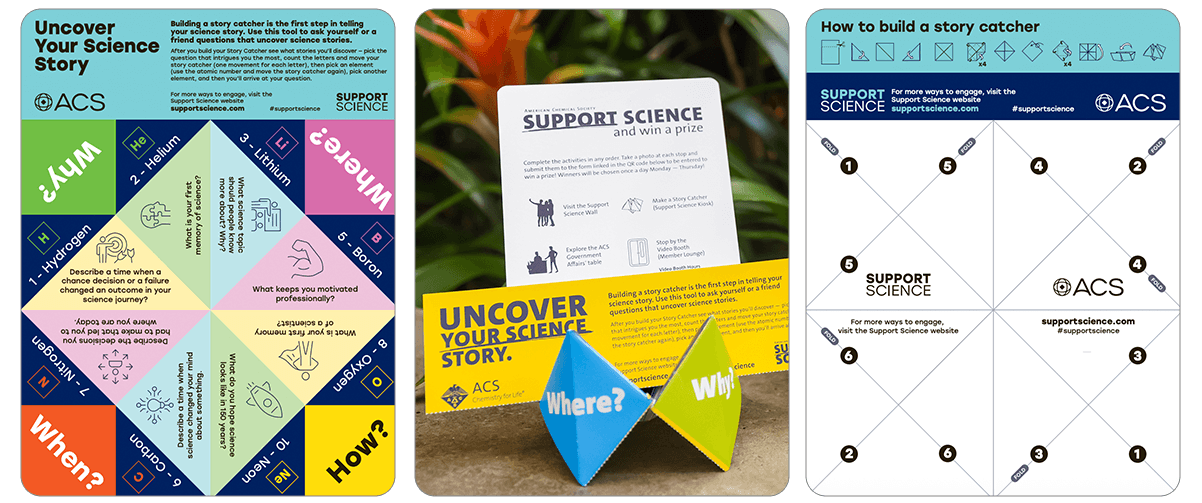
At the 2026 ACS Spring meeting, visitors gathered around our table to tear and fold their own storycatchers. Some laughed as they remembered the childhood game; others concentrated on getting the folds right. Many picked up extra sheets to share with their classrooms, peers, and family.
Takeaway: Can a familiar game or hands-on activity help your audience better connect with your products or brand messages?
Why Bother?
A hand-drawn chart isn’t automatically better than a polished vectorized graphic. And a sheet of paper doesn’t become interesting just because you can hold it. What draws me to these examples is what people can do with them: follow someone’s thinking, contribute a sketch, turn a cover into something new, or fold a piece of paper and start a conversation.
I’m not suggesting we abandon digital content or make everything by hand. But when planning our next piece of content, we could ask more than what we want our audience to read or watch. What could we invite them to make, hold, or play with?